For agri-input and biologicals companies
Why do your trial results vary site to site?
Because the soil under each site is different, and most trials do not measure it. We measure each site's biology, chemistry and physics, add satellite and climate data, and show which site conditions your product's response follows, and where it is likely to work next.
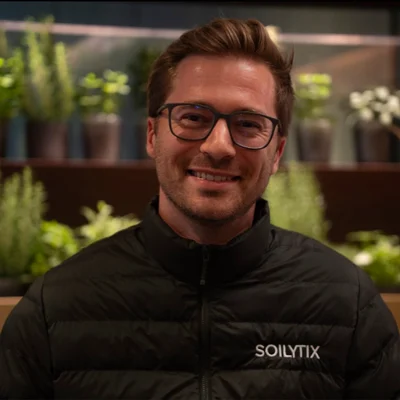
Thirty minutes with Julien Winkel and Dr Matthias Schaks. Bring last season's results from more than one site.
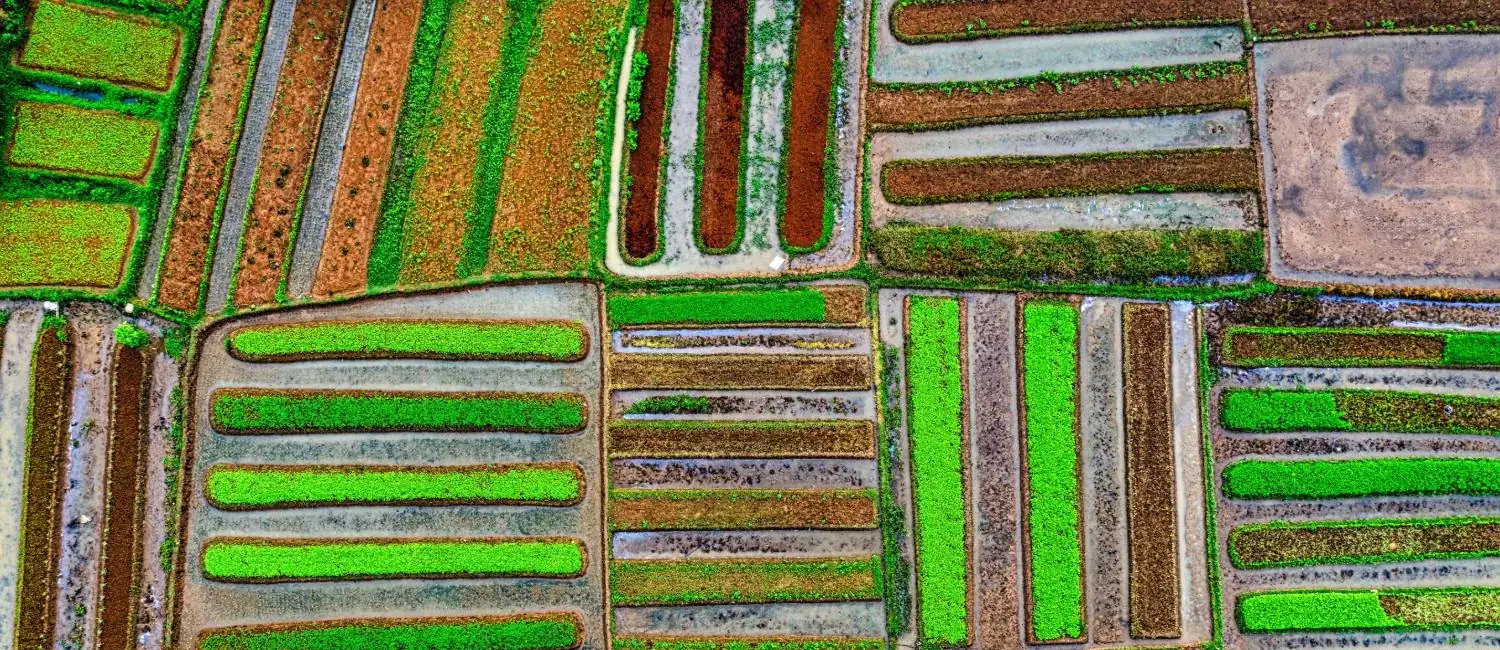
A read of every trial site, and why it responded or not.
Before you plan the next season: for each site, whether your product responded, what in the soil and the season most likely explains it, and how sure we are.
Trial read · Bacillus seed treatment
Winter wheat · season 2026
12sites
7responded
5no difference
Illustrative| ID | Site | Soil | Against control | What explains it | Confidence |
|---|---|---|---|---|---|
| S-03 | Lindenhof | Sandy loam | Responded | Low organic matter, few native Bacillus | High |
| S-05 | Am Bach | Loam | Responded | Neutral pH, open structure, mild spring | High |
| S-07 | Oberfeld | Silty clay | No difference | A large resident Bacillus population | Medium |
| S-11 | Niederung | Heavy clay | No difference | Cold, wet spring at sowing | Medium |
S-03Lindenhof
- Soil
- Sandy loam
- Against control
- Responded
- What explains it
- Low organic matter, few native Bacillus
- Confidence
- High
S-05Am Bach
- Soil
- Loam
- Against control
- Responded
- What explains it
- Neutral pH, open structure, mild spring
- Confidence
- High
S-07Oberfeld
- Soil
- Silty clay
- Against control
- No difference
- What explains it
- A large resident Bacillus population
- Confidence
- Medium
S-11Niederung
- Soil
- Heavy clay
- Against control
- No difference
- What explains it
- Cold, wet spring at sowing
- Confidence
- Medium
Thirty minutes with Julien and Matthias, looking at your own trial network.
Your trial is crediting the product with what the soil did.
A biological lands in a soil that already has its own organic matter, pH, texture and microbes, in a season with its own weather. Few trials record much of that, so it ends up in the product's result.
Results that change from site to site
A product wins at one site and does nothing at the next, and nobody can say whether that was the product, the ground or the weather.
Growers who try it once
Growers judge a biological on one season. If it shows nothing on their soil, they rarely try it again.
Claims that need many sites
Under EU 2019/1009 a biostimulant must have the effect its label claims, so a claim needs trials across conditions, with each site's soil described.
What the soil can do to a trial
A Bacillus seed treatment on winter wheat, tested against four other treatments at three sites in one season.
Site A
Site B
Site C
| Site A | Site B | Site C | |
|---|---|---|---|
| Your Bacillus seed treatment | 1 | 3 | 5 |
| Standard chemical seed treatment | 2 | 1 | 1 |
| Seaweed-extract biostimulant | 3 | 2 | 2 |
| Humic acid | 4 | 4 | 3 |
| Untreated control | 5 | 5 | 4 |
| Site A | Site B | Site C | |
|---|---|---|---|
| Your Bacillus seed treatment | 1 | 3 | 5 |
| Standard chemical seed treatment | 2 | 1 | 1 |
| Seaweed-extract biostimulant | 3 | 2 | 2 |
| Humic acid | 4 | 4 | 3 |
| Untreated control | 5 | 5 | 4 |
Site ASandy loam
pH 6.8 · Low organic matter · Few native Bacillus
Little competition in the root zone, and the treatment came out on top.
Site BSilty clay
pH 7.4 · A large resident Bacillus population
The soil already carried plenty of Bacillus, so the treatment had little to add.
Site CHeavy clay
pH 6.2 · Cold, wet spring
Waterlogged and cold at sowing. The treatment came out below the untreated control.
An illustrative example, not trial data. Ranks only; a real read gives each effect against the control with its interval.
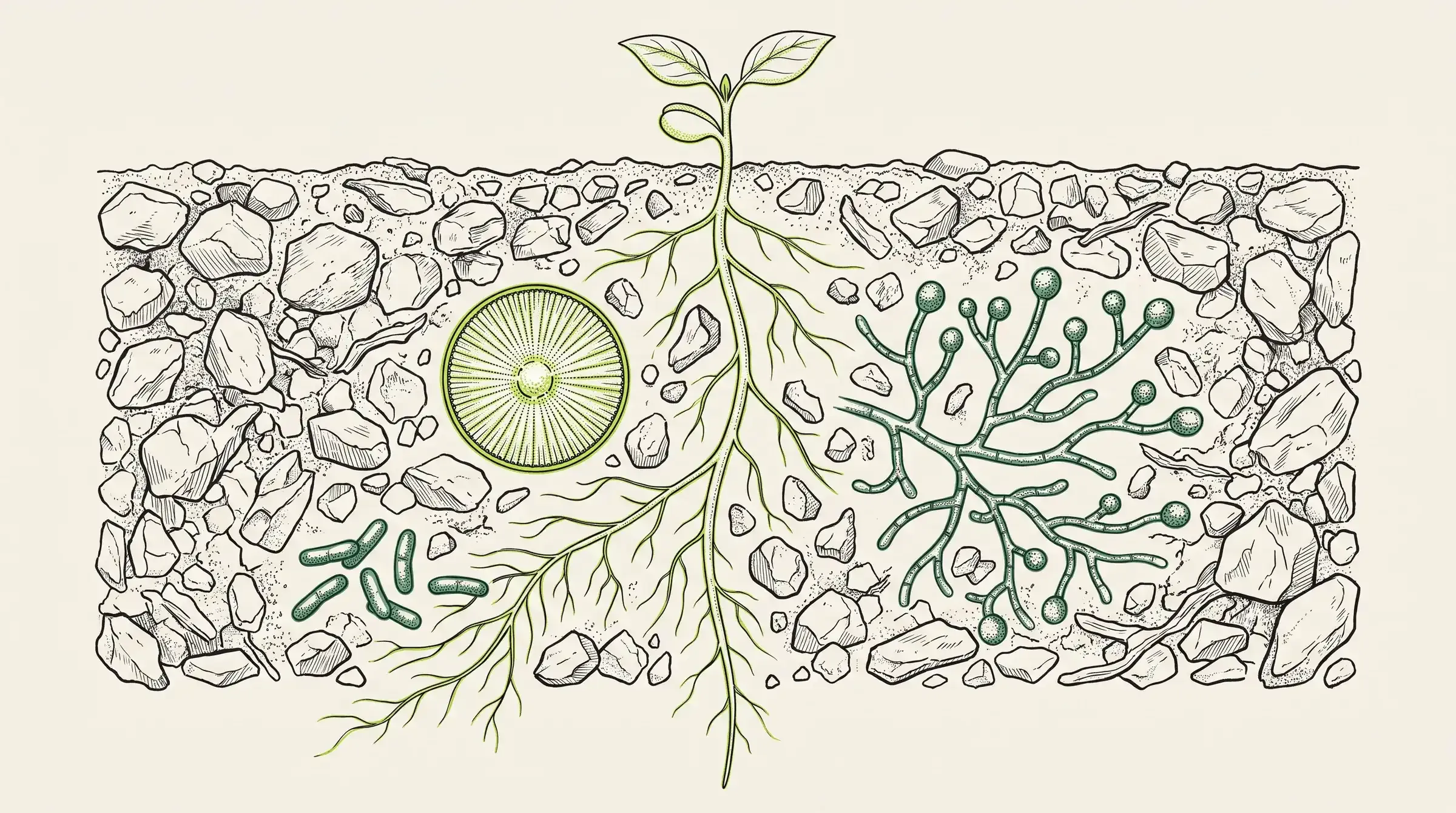
We measure the site, not only the plot.
At each trial site we sample the soil, sequence its bacteria and fungi, and measure its chemistry and physics. Satellite and climate data add the season each site had. Erdaphon-1, our model, sets all of it against your trial results, trained on your trials and our reference set of soils, and Matthias Schaks, who leads our biomarker work, checks every read.
What comes out
For each site, which conditions your product's response followed.
And the soils it is likely to work in next, for the next trial or market.
The evidence
Soil moves a result before any product is applied.
In a peer-reviewed study of one German maize field, the soil's bacterial community predicted about 65% of the point-to-point variation in yield. That is one field and no product. A separate meta-analysis of more than a thousand field comparisons found that biostimulant response varied with soil organic matter, pH and texture.
Two published results on soil and field outcomes.
- About 65%of point-to-point yield variation in one maize field, predicted from the soil's bacteria.
- 1,087 comparisonsof biostimulant field trials, in which response varied with soil organic matter, pH and texture.
On some farms, the right advice was to keep the plough.
Not a product trial, but the same question: why one practice paid on some farms and cost on others.
The challenge
An agricultural company saw yields fall on farms that had switched to no-till, and needed to know whether to recommend it everywhere.
What we did
We sampled farms on both sides of the switch, sequenced and measured each soil, added satellite and climate data, and compared them against each farm's tillage history and yields.
What they got
A farm-by-farm read of where no-till costs yield and where the soil recovers. On some farms the advice changed to keep tilling.
Before you send us your trials.
5 questionsHow many sites do you need?
Sites where the product responded and sites where it did not, so the soil can be compared across both. The feasibility check sets the number from your past trials.
Does this replace our trial provider?
No. We sample at the sites your trial provider already runs. The trial design stays theirs and yours.
Does it help a claim under EU 2019/1009?
A claim needs trials across different conditions, with the soil described. We describe it in depth, biology included. Whether a claim holds is for your trials and your regulatory team to show.
Who owns the data?
You keep your raw data and everything the work produces for your fields. The models and pipelines behind it stay ours.
What happens after the call?
A call. Thirty minutes on your question and the data you already have.
A feasibility check (go or no-go). A small fixed fee. Whether the answer is in your data, and what sampling it needs. It can end in no.
Build and test (go or no-go). We build it on your fields, agree in writing what counts as working, and test it on fields you held back.
Every season. It keeps running on the fields you name and improves as seasons add up. Your raw data stays yours.
Send us your trial network.
What you are testing, on how many sites, over how many seasons. Julien will reply as soon as he can, with times for a call, and Matthias joins it.
You leave the call knowing whether your question can be answered from the trials you already have, and what sampling it would need. If it can, the next step is a feasibility check for a small fixed fee, and it can end in no.

Julien WinkelChief Commercial Officer
Dr Matthias SchaksHead of Biomarker Development