Know which fields will cost you seed. Before you sign the contract.
Our model reads each field's crop history from satellite images. Add soil samples where the risk is high. You contract the fields most likely to deliver.
30-minute call. No data needed to start.
One wrong field. A season of seed lost.
Your grower offers the field. If it fails, you carry the loss. Four gaps seed producers told us about, before any contract is signed.
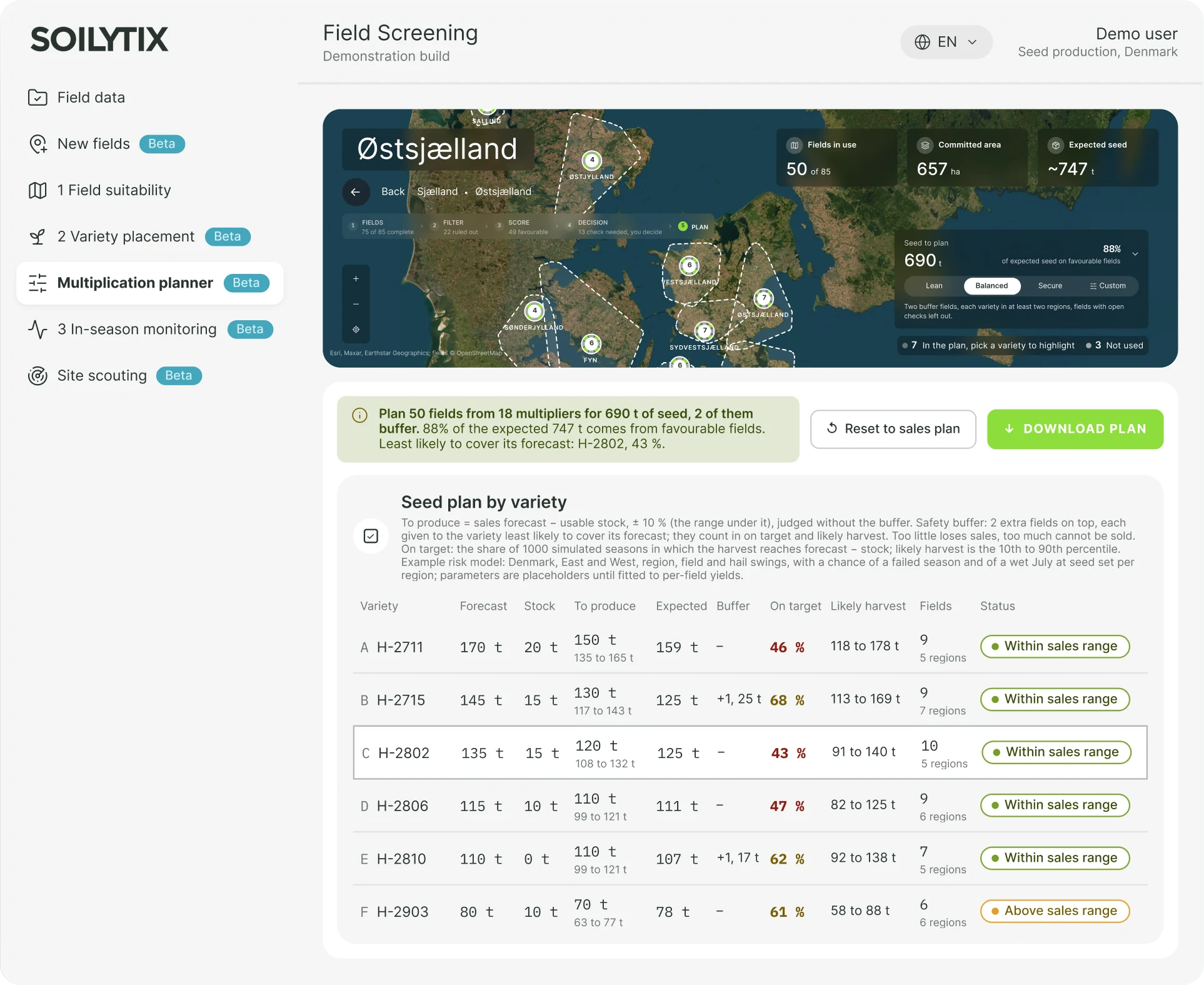
Example, one variety
43 %
- 01Intake
Data arrives in pieces
Field forms, maps and crop history come from each grower separately, and someone chases the missing ones by phone.
- 02Rotation
Rotation is checked on trust
A broken rotation is a no-go, but records often reach back only a few years and depend on what the grower remembers.
- 03Disease
Disease stays out of sight
Soil-borne pathogens are invisible at contracting, and sampling every field is too slow and too costly for many crops.
- 04Harvest
Weak fields show too late
A field that falls behind is often noticed at harvest, when the seed volume is already lost.
What we heard
Disease in our seed hits our sales.
Vegetable seed company We only test for pathogens when something has already gone wrong.
Breeder and seed producer Sclerotinia is the field check we would want first.
Forage seed company
Illustrative story built from conversations with seed producers at Euroseeds 2026. Lines are paraphrased from our notes and anonymised. Not a customer result.
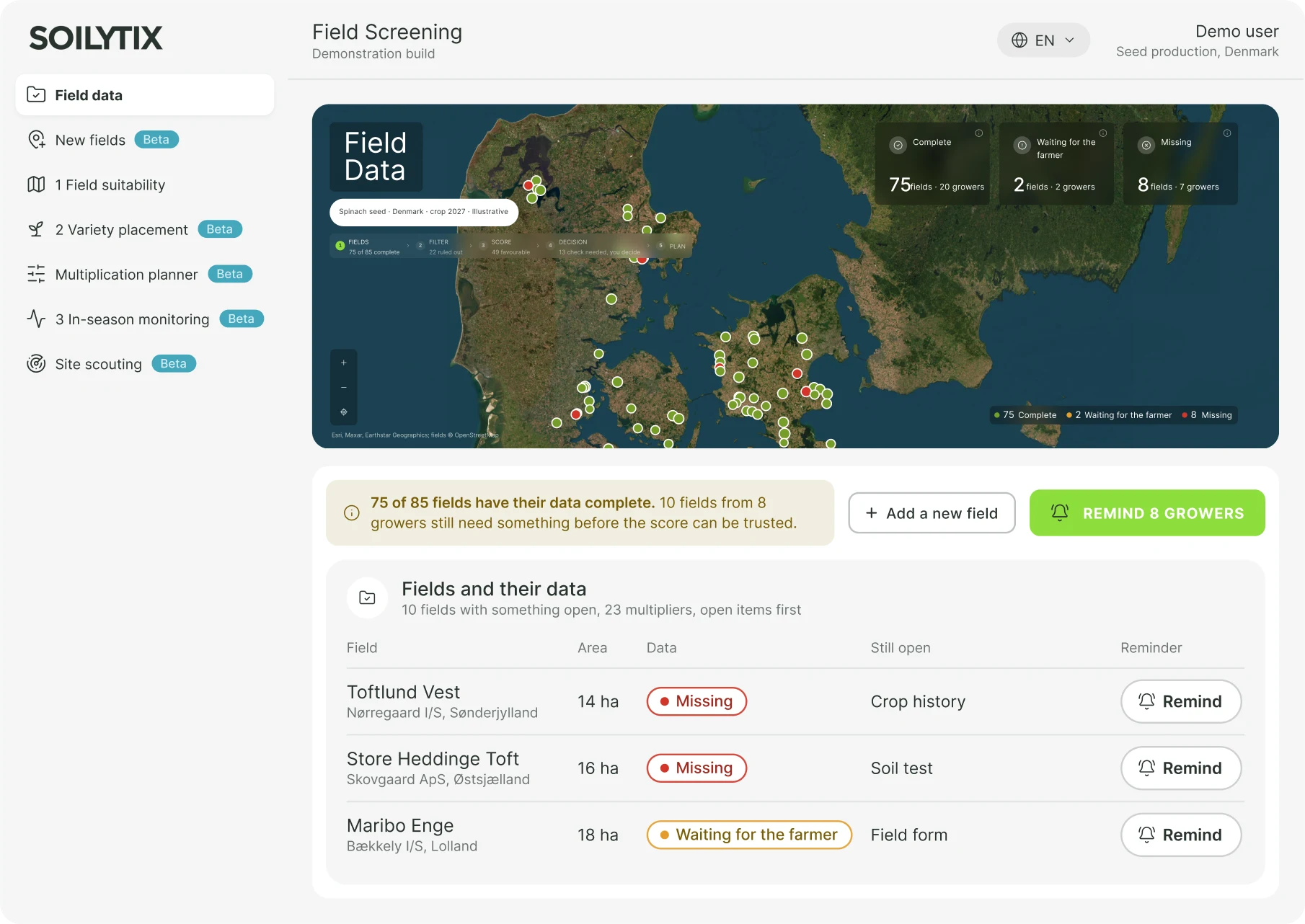
From the fields on offer to a signed contract.
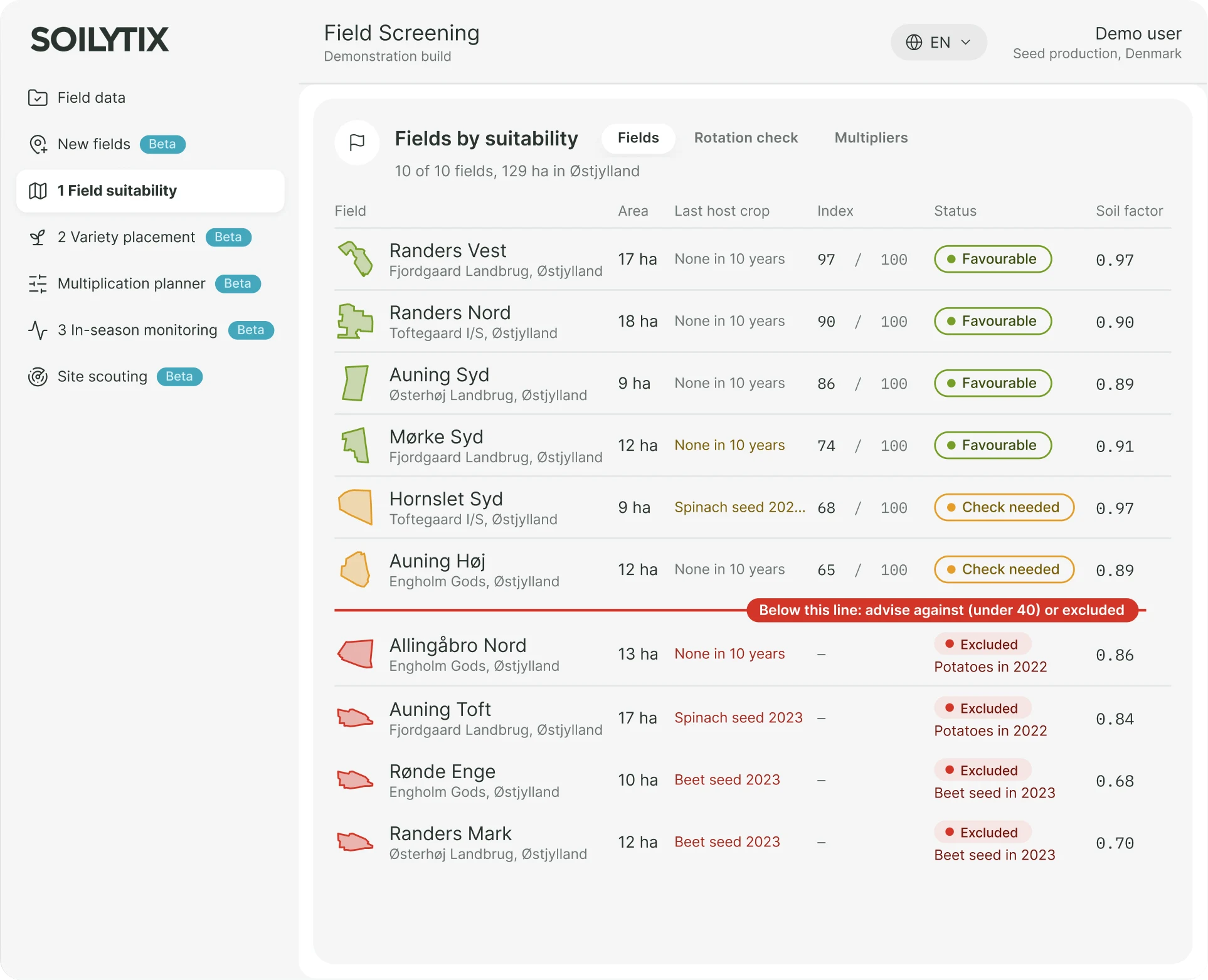
Each season you choose from the fields your growers offer. We help you rank them before the contract, and keep the reasons behind every call.
Checked on every offered field
Host-crop filter
Recent host crops, such as rapeseed for Sclerotinia, are checked on every field.
Crop history, by model
A model reads each field's past crops from satellite images and checks them against the grower's records.
Previous crops, checked
Fields that break your rotation rules, or lack the data, are flagged as no-go.
Soil samples where it matters
Add soil DNA and chemistry on shortlisted or high-risk fields only.
Same fields. Same deadline. A different basis for the decision.
The offer list is the same either way. What changes is what you know about each field when the contract is signed.
Fields picked on declarations and memory
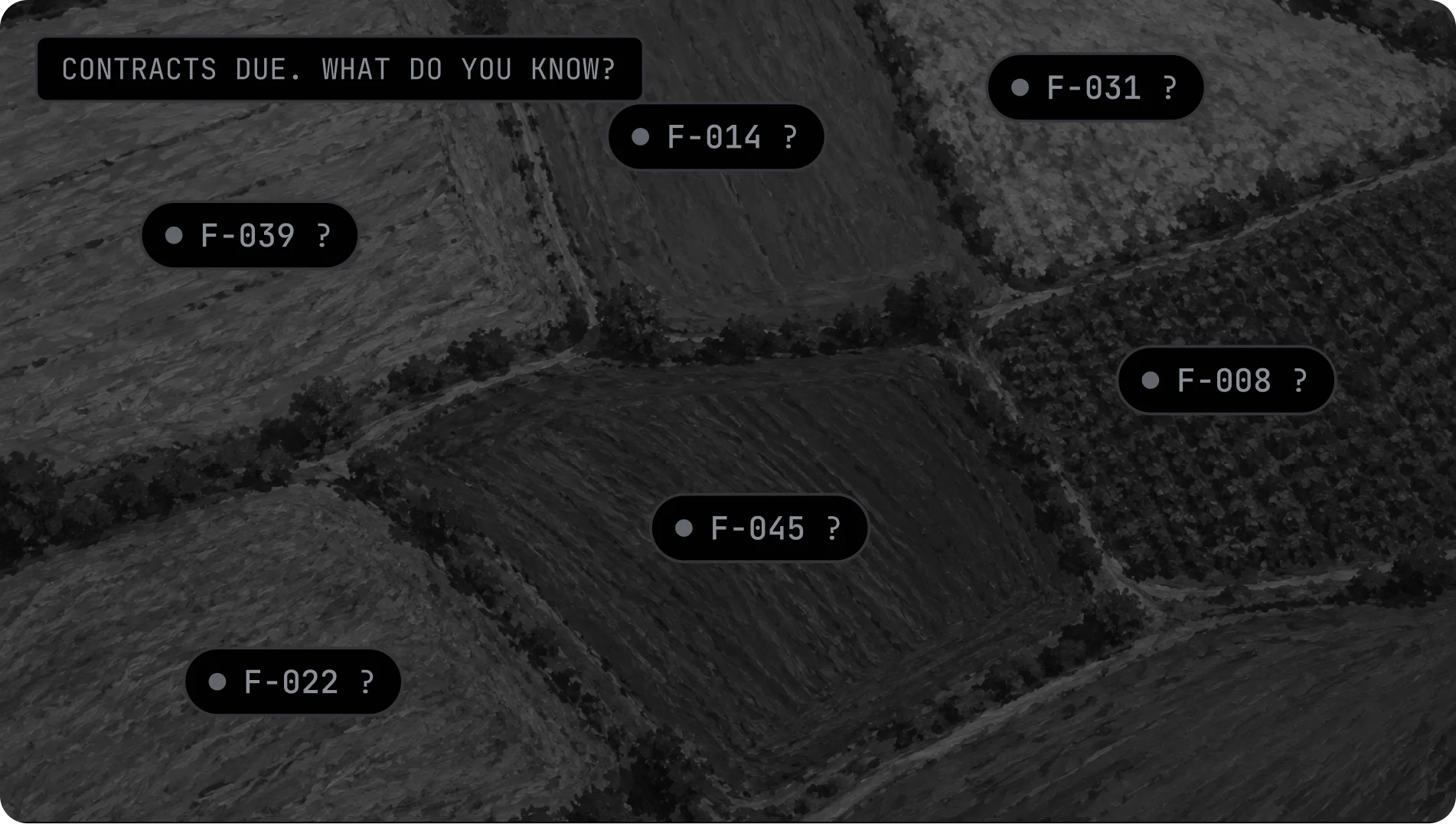
Fields screened before you sign
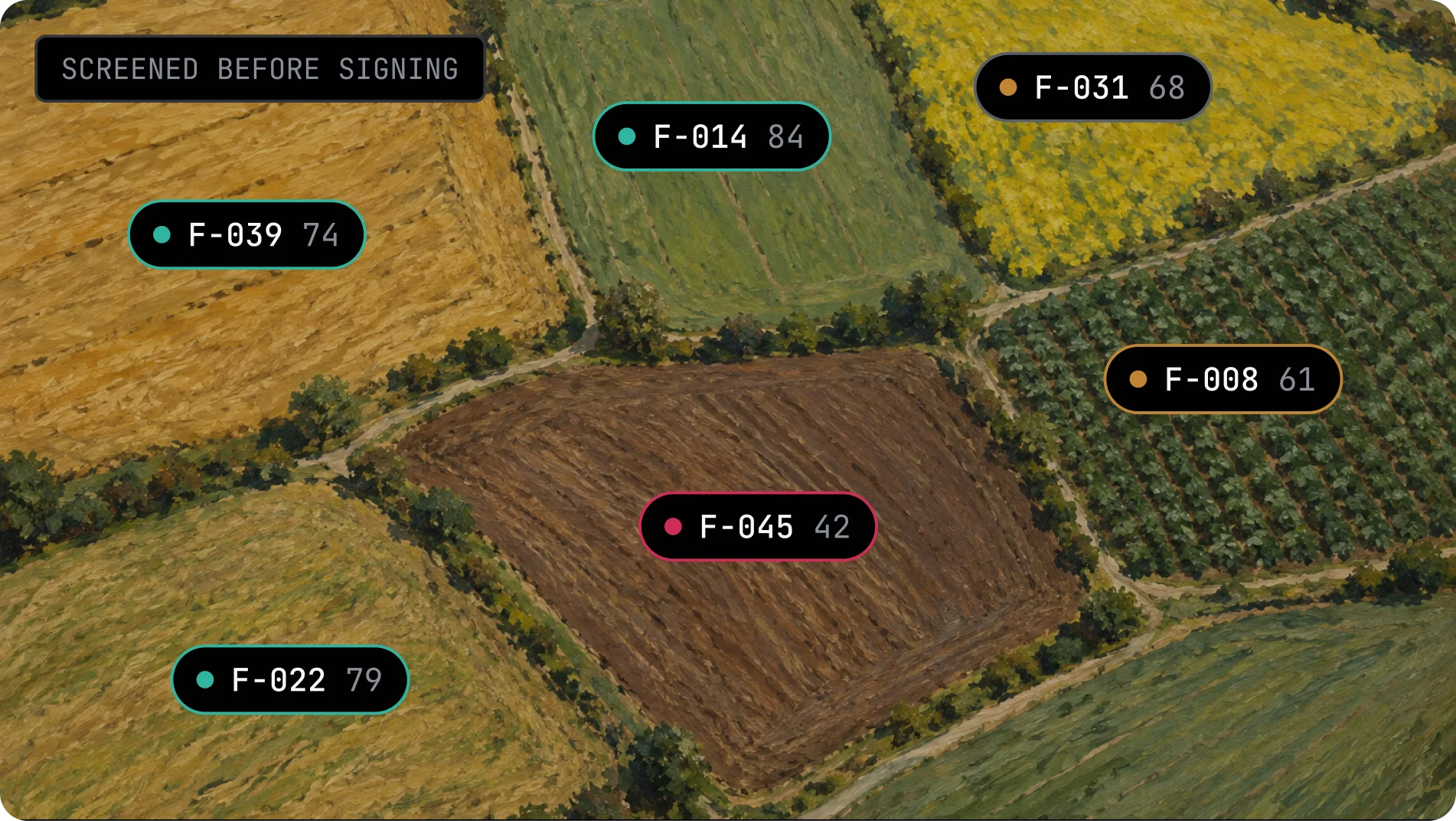
It does not guarantee clean seed. It ranks the fields on offer by risk before you sign, and shows how sure each estimate is. The contract decision stays with your team.
Illustrative. Fields and values are examples.
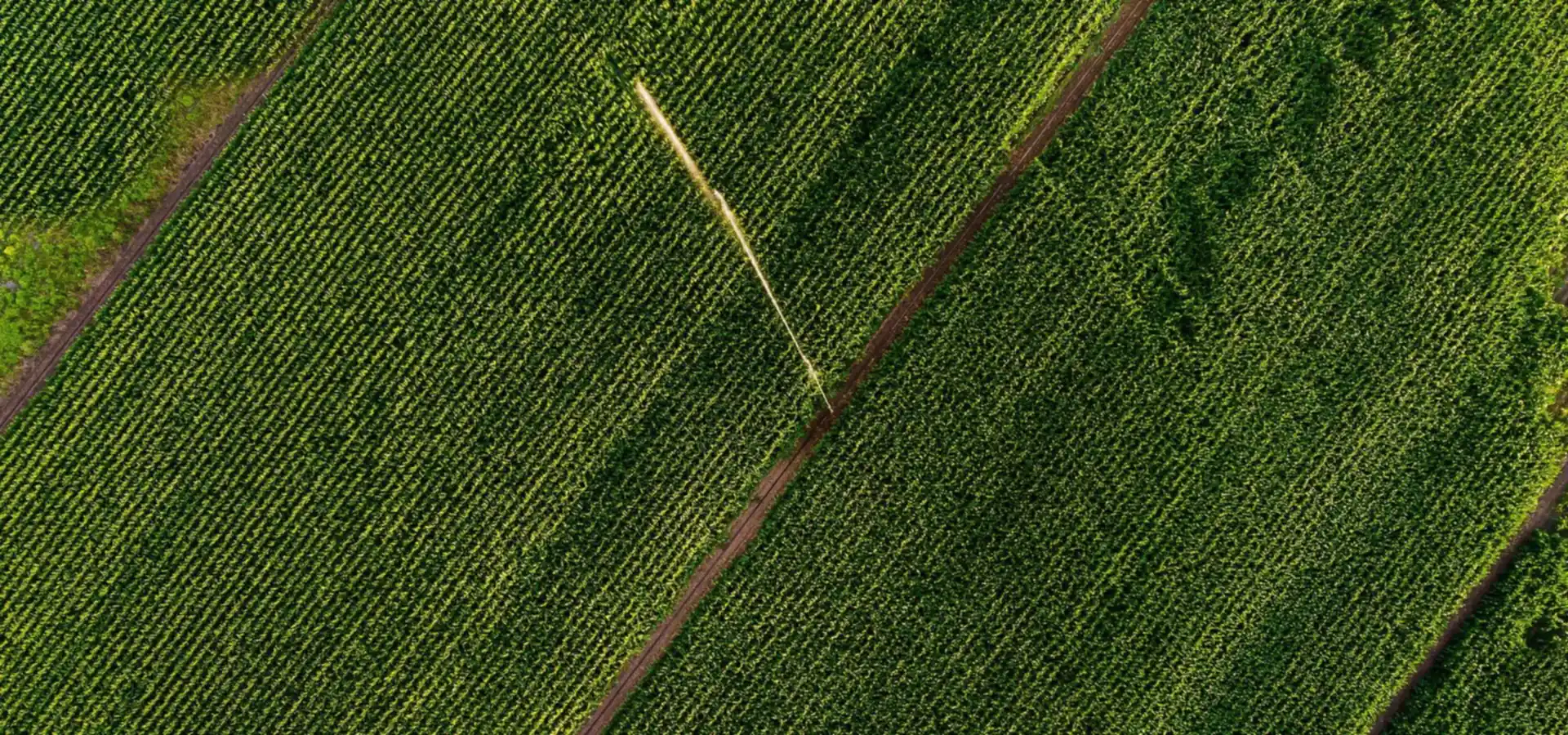
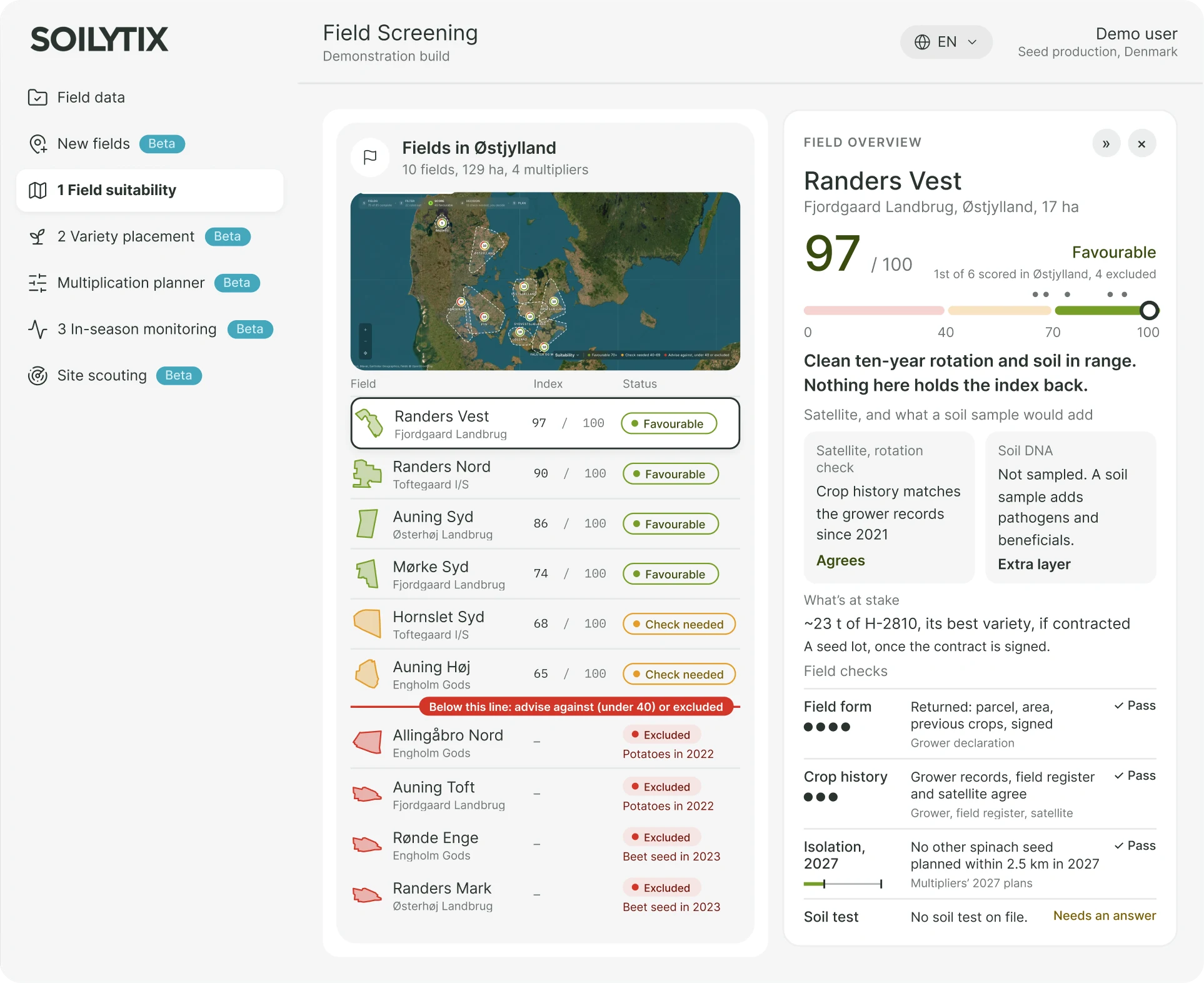
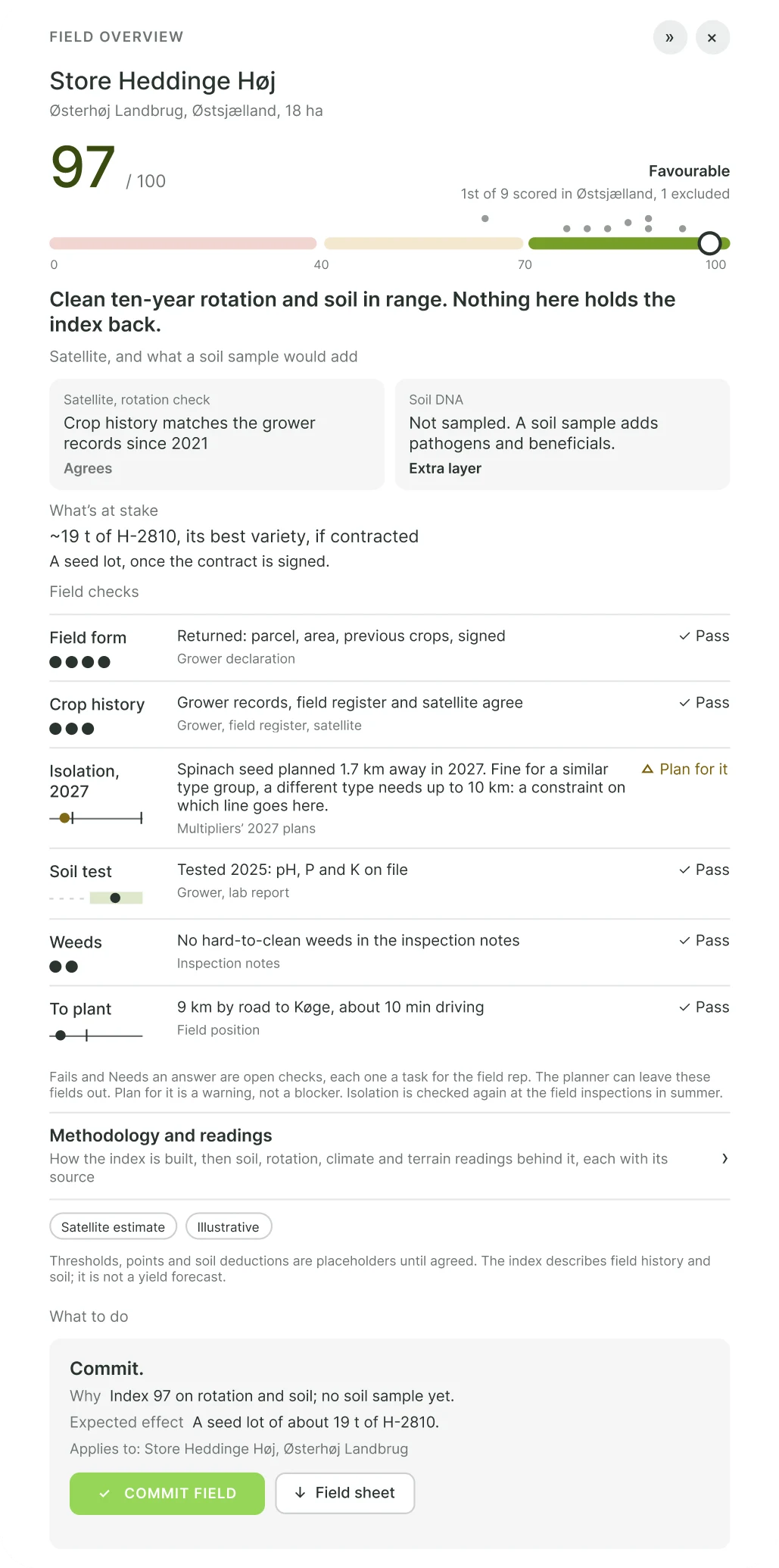
One index per field, explained.
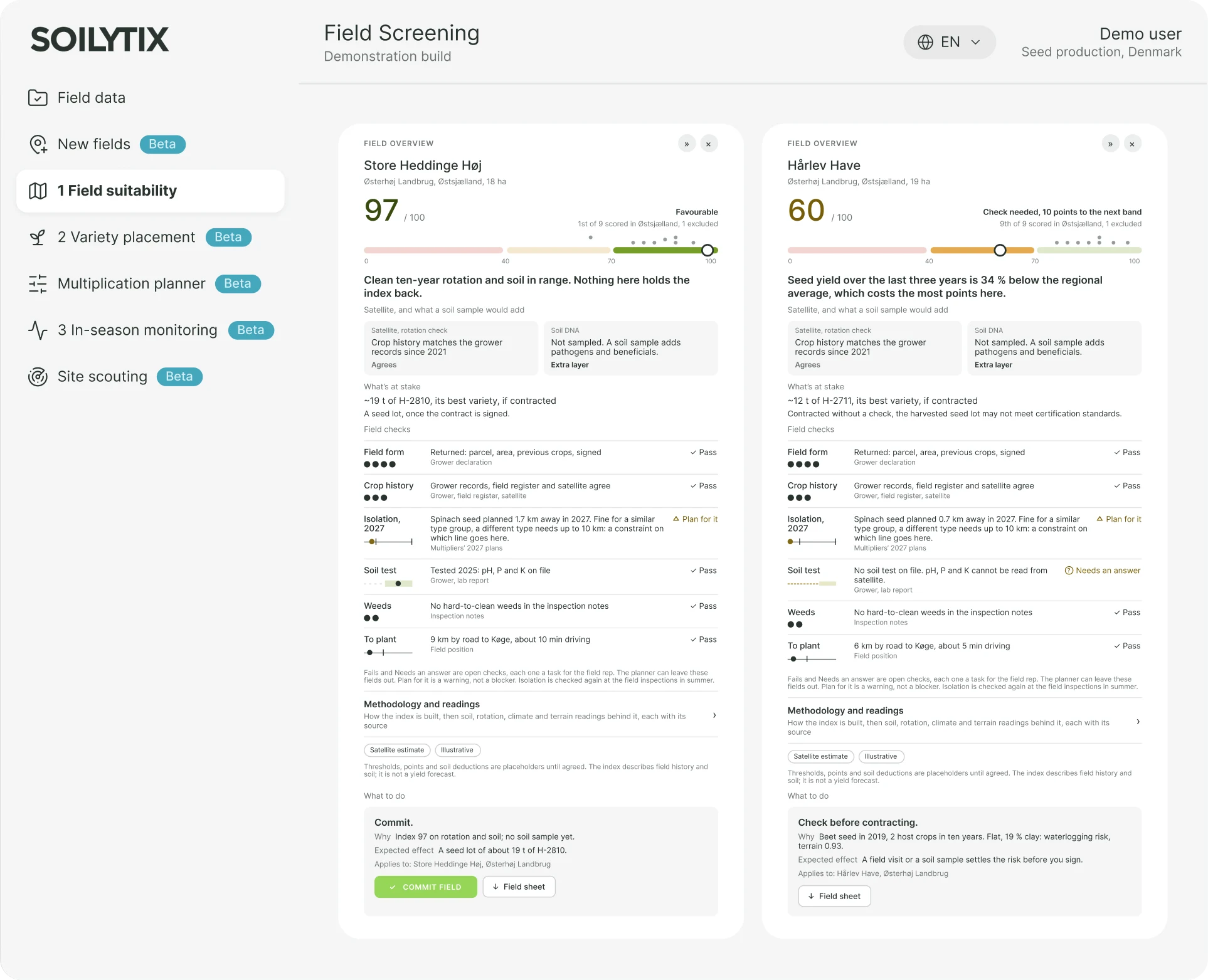
Open a field and see what raised or lowered it, so your agronomists can check the reasoning before a contract goes out.
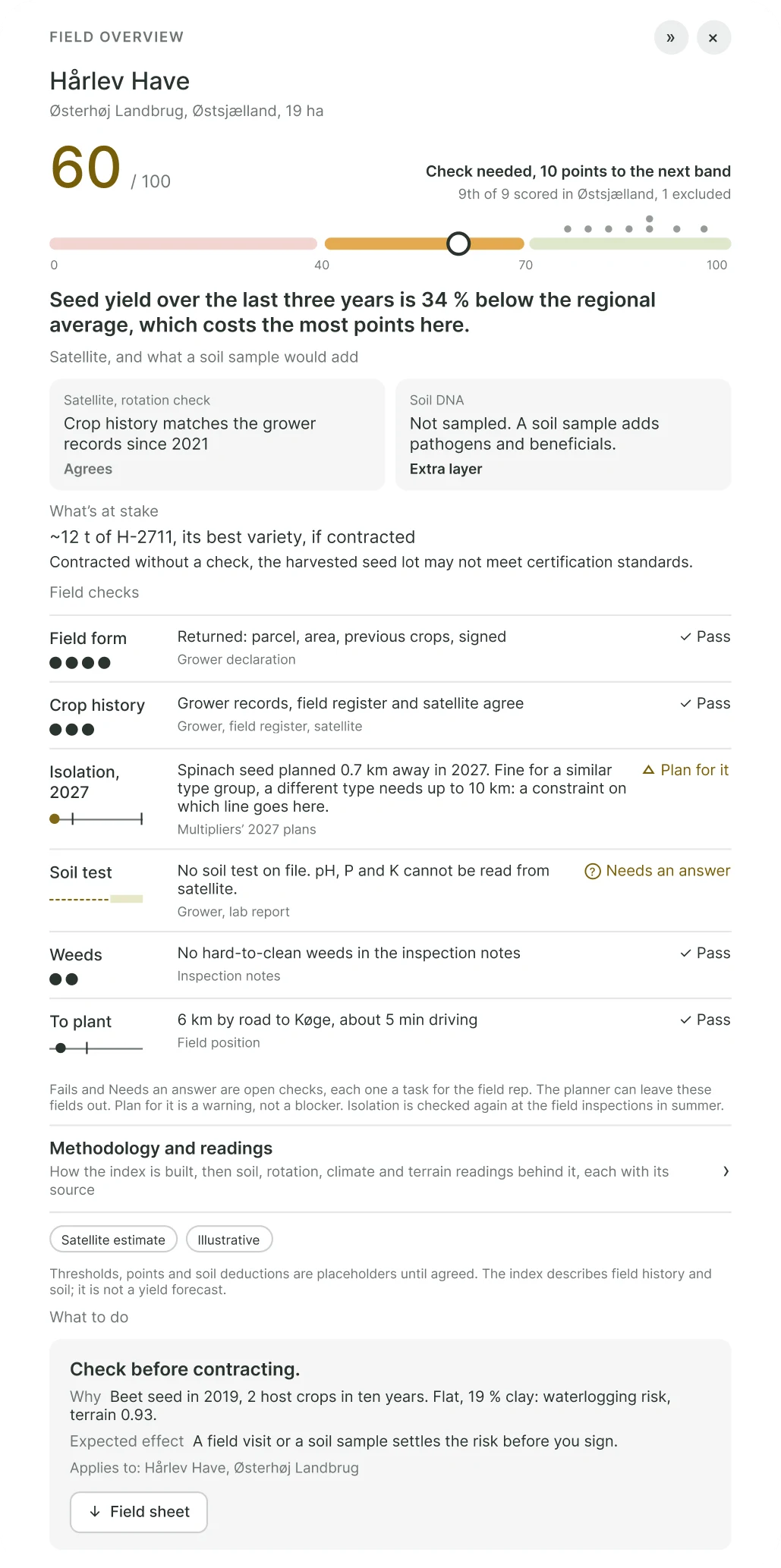
- 01Ranked in its region
Each field is placed among the fields scored in the same region: 1st of 9 in Østsjælland, 1 excluded.
- 02What a soil sample would add
Satellite checks the crop history against the grower's records. A soil sample adds pathogens and beneficials, which satellite cannot read.
- 03Field checks
Field form, crop history, isolation, soil test, weeds and the way to the plant, each marked pass, plan for it or needs an answer.
- 04What to do
One call per field, commit or check before contracting, with the reason and what it is expected to change.
Prototype screen, illustrative data (spinach seed, Denmark, crop 2027). The index describes field history and soil; it is not a yield forecast.
Start light on this season's offers. Scale on a licence.
No large data project up front. Screen every candidate field by satellite, then add soil samples on the 20 to 30 % that are shortlisted or risky.
Feasibility first, then a licence. Fees are agreed per programme.
In-season monitoring is in development and is not part of the current offer.
- Option 1Recommended start
Satellite only
Screen every candidate field quickly, before anything is contracted.
~2 weeksNo sampling
Start with a feasibilityWhat you get:
- All candidate fields ranked per crop, each with its reasons
- Crop history from your records, checked by satellite
- No-go fields flagged: rotation rules, missing data
- Option 2
Satellite + soil samples
For shortlisted or high-risk fields: new regions, rapeseed after Brassica, parent lines.
~6 weeksOne sample per 30 ha field
Talk to usEverything in Satellite only, and:
- Soil DNA: soilborne pathogens and beneficial organisms
- Soil chemistry and texture
- Each field's disease risk and soil limits, with the reasons
- Step 2
Licence
For screening every offer, every campaign, once the feasibility has shown its value.
Per seasonPer crop, per season
Talk to usEach campaign:
- Every offered field screened in the planner
- Your rules and thresholds kept up to date
- Results with benchmark, confidence and sources
Stop signing fields blind. Start with the soil.
Begin with a feasibility on this season's offers. Scale on a licence when it has shown its value.