For soil monitoring agencies, chambers and institutes
How do we measure what the EU law now requires?
The Soil Monitoring Law asks for soil biology by DNA metabarcoding on at least 5% of sampling points, measured so that each campaign compares with the last. We design the sampling with soil maps, satellite land cover and climate data, sequence the biology and measure the chemistry and physics at each point, on one documented method that is yours.
Thirty minutes with Dr Franziska Böwer and Julien Winkel, on your monitoring design.
A campaign record another laboratory could repeat.
For each soil unit: the points, the descriptors measured and every method choice, written down and yours to publish.
Campaign record · 2026 pilot
Three soil units · one documented protocol
40sampling points
3soil units
Illustrative| ID | Soil unit | Points | Descriptors | Method record | Status |
|---|---|---|---|---|---|
| U-1 | Cropland on loess | 16 | Fungi, bacteria, nematodes | Depth, extraction kit and marker regions written down | Sequenced |
| U-2 | Grassland on clay | 12 | Fungi, bacteria | Same record, same protocol | Sequenced |
| U-3 | Forest on sand | 12 | Fungi, bacteria | Same record, same protocol | In the laboratory |
U-1Cropland on loess
- Points
- 16
- Descriptors
- Fungi, bacteria, nematodes
- Method record
- Depth, extraction kit and marker regions written down
- Status
- Sequenced
U-2Grassland on clay
- Points
- 12
- Descriptors
- Fungi, bacteria
- Method record
- Same record, same protocol
- Status
- Sequenced
U-3Forest on sand
- Points
- 12
- Descriptors
- Fungi, bacteria
- Method record
- Same record, same protocol
- Status
- In the laboratory
Thirty minutes with Franziska and Julien, on a pilot on your own sites.
The law names the method. National protocols are still to come.
Directive (EU) 2025/2360 names DNA metabarcoding of fungi and bacteria for soil biodiversity (Annex I, Part C), without criteria for now. How each member state samples, extracts and sequences is still open, and what it decides has to hold for decades.
Long-term sites with no biology on record
In Germany, the federal environment agency found no DNA metabarcoding yet on the long-term soil observation sites.
A precision target to meet
The Directive caps the error of soil-unit estimates at 5% (Art. 9(1)). That is a sampling design problem before it is a laboratory one.
A method that must hold for decades
If the method shifts between campaigns, part of the change you report is the method's, not the soil's.
What a change of method can do
The same five sites ranked by bacterial richness, with the DNA extracted and sequenced three ways.
Method 1
Method 2
Method 3
| Method 1 | Method 2 | Method 3 | |
|---|---|---|---|
| Reference site | 1 | 3 | 5 |
| Site B | 2 | 2 | 4 |
| Site C | 3 | 1 | 2 |
| Site D | 4 | 5 | 1 |
| Site E | 5 | 4 | 3 |
| Method 1 | Method 2 | Method 3 | |
|---|---|---|---|
| Reference site | 1 | 3 | 5 |
| Site B | 2 | 2 | 4 |
| Site C | 3 | 1 | 2 |
| Site D | 4 | 5 | 1 |
| Site E | 5 | 4 | 3 |
Method 1Kit A, V4 region
Extraction kit A · 16S rRNA, V4
On one kit and one marker region, the reference site ranks first.
Method 2Kit B, V4 region
Extraction kit B · 16S rRNA, V4
Another kit recovers a different share of the community, and the order shifts.
Method 3Kit A, V3 to V4
Extraction kit A · 16S rRNA, V3 to V4
Another marker region reshuffles it again.
An illustrative example, not measured data.
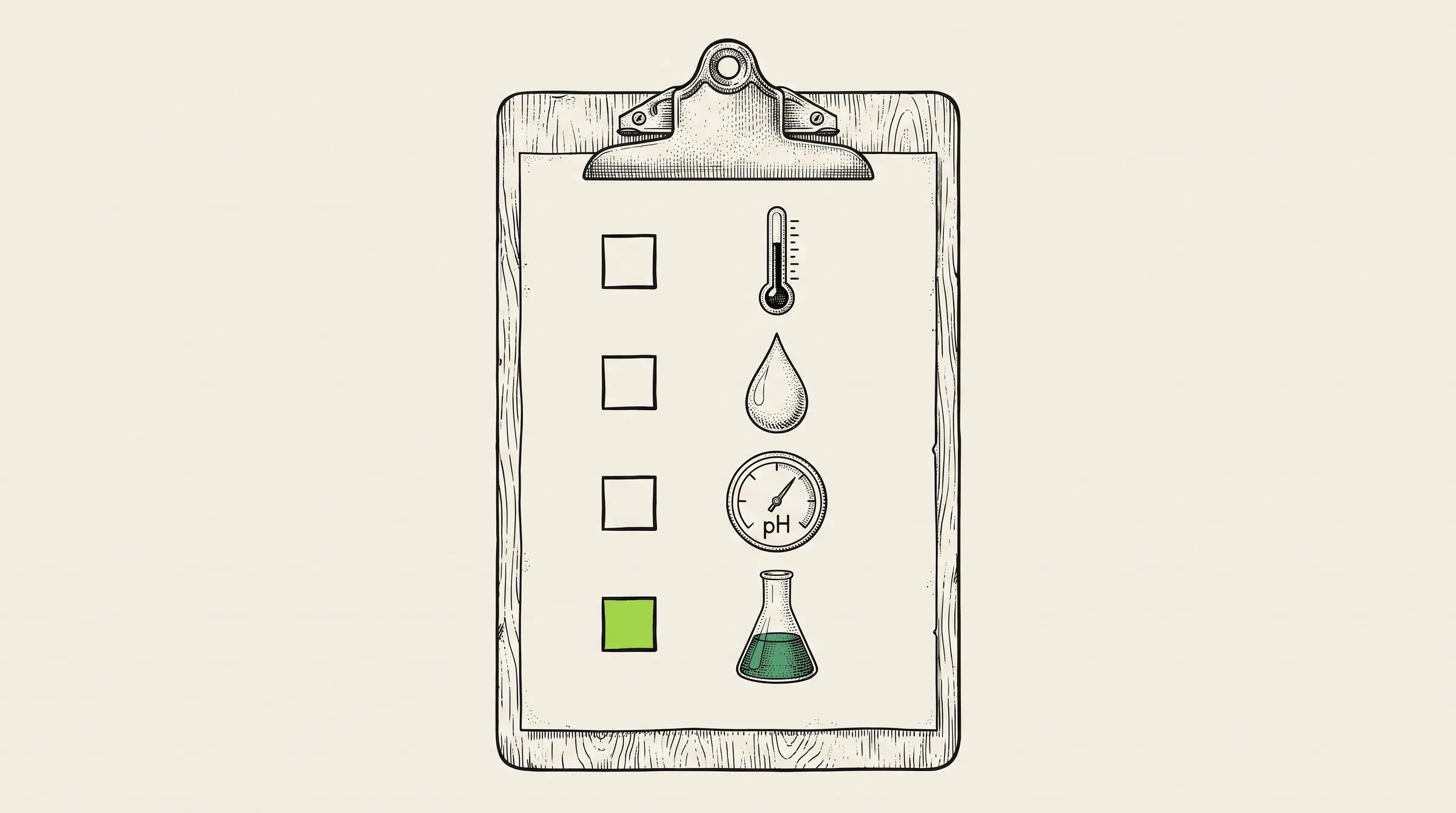
One documented method, from design to sequence data.
We stratify soil units using soil maps with satellite land cover and climate data, and set the points to your precision target, using LUCAS points where they fit. At each point we sequence the fungi and bacteria and measure the chemistry and physics the Directive lists. Franziska Böwer and our laboratory write every method choice into a record that belongs to you.
What comes out
A sampling design, biodiversity data for each point, and a record of the method.
Yours to keep and to publish, so the next campaign, or another laboratory, can repeat it.
The dates
First measurements are due by December 2030.
Directive (EU) 2025/2360 entered into force on 16 December 2025. Member states put it into national law by 17 December 2028, complete the first soil measurements by 17 December 2030, and repeat them every six years after.
Directive (EU) 2025/2360: the dates set in its articles. A new campaign follows every six years.
- 16 Dec 2025In force.
- NowTime to settle a method.
- 17 Dec 2028National laws in force (Art. 26).
- 17 Dec 2030First measurements complete (Art. 9(8)).
- 17 Dec 2031First soil health assessment (Art. 10(1)).
Four rounds on one method, and the years now compare.
The challenge
A state research institute needed to follow a soil-borne pest across the same sites, year after year, and compare the years.
What we did
One sampling and DNA detection protocol, written down and run the same way every round.
What they got
Four rounds of pest monitoring on the same method, showing where pressure rises and falls from year to year. They have renewed every season.
Procurement and method questions.
5 questionsWhose method is it?
Yours. The method record for your campaign belongs to you and can be published, so another laboratory could repeat it.
Is your laboratory accredited to ISO/IEC 17025?
Not yet. The Directive asks laboratories to apply EN ISO/IEC 17025 quality management (Art. 9(7)). Our accreditation is in preparation, and we will tell you exactly where it stands before you plan with us.
Will our data compare with LUCAS?
The Directive allows LUCAS points to be used. Whether results compare depends on matching LUCAS's sampling and laboratory method; we design for it and tell you exactly where the two differ.
Can you work within a tender?
Yes. Tell us your route, open tender or framework, and we will send what it needs. A pilot on your own sites is often the simplest place to start.
What happens after the call?
A call. Thirty minutes on your monitoring design, your sites and your timeline.
A pilot on your sites (go or no-go). A small fixed fee. The method run on a set of your existing sites, so you can judge the data before you commit.
The campaign design. A sampling design and a method record, written to your precision target.
Every campaign. The same method each time, so this campaign compares with the last.
Talk to us about a pilot.
Your region, the soils you monitor and where you are with transposition. Julien will reply as soon as he can, with times for a call, and Franziska joins it.
You leave the call knowing what a pilot on your own sites would cover, and what our method record contains. If it fits, the next step is a pilot on your own sites for a small fixed fee, and it can end in no.
Dr Franziska BöwerScientist

Julien WinkelChief Commercial Officer